
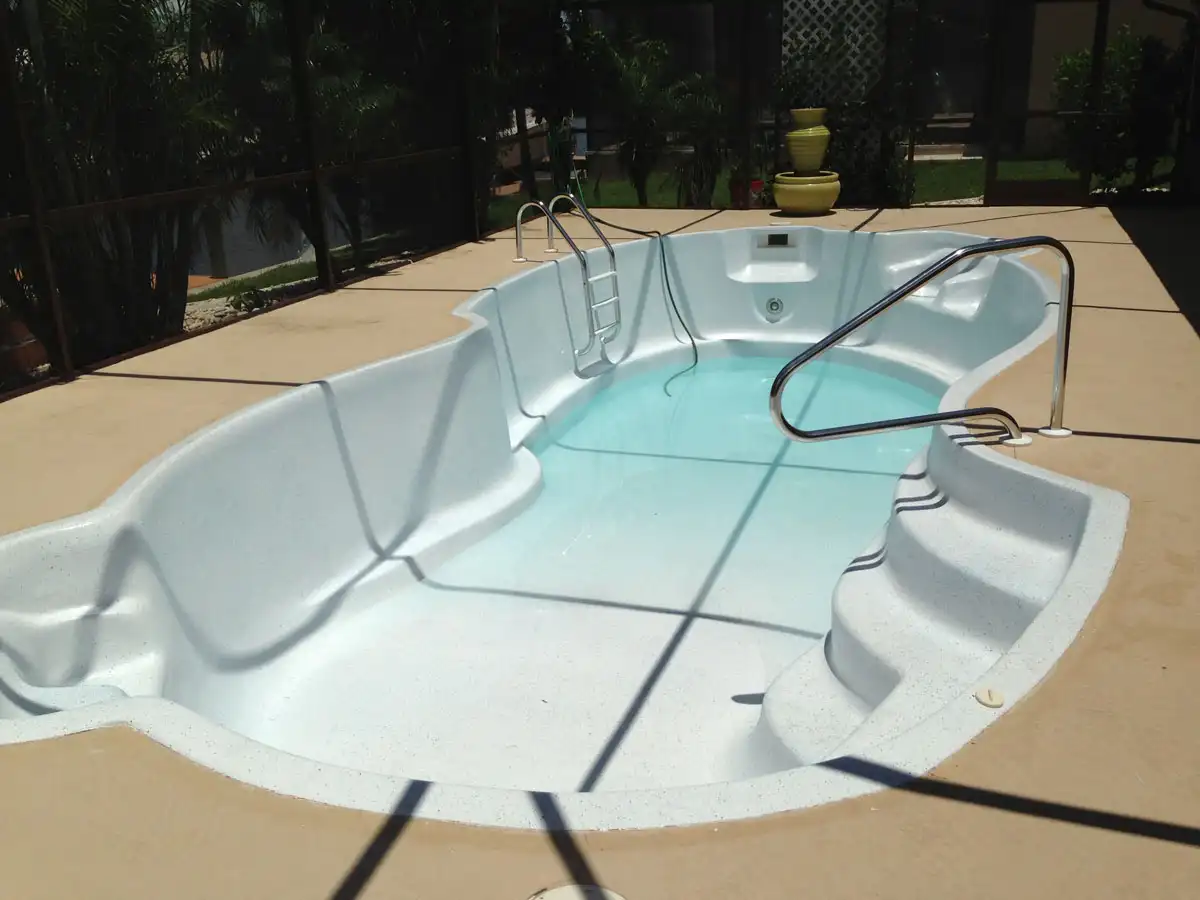
Repairs that treat the cause
Fiberglass problems are sneaky: the symptom you can see is often not where the trouble started. A crack can trace back to ground movement, a blister to water wicking through a thin gelcoat, a bulging wall to groundwater pressure behind the shell.
We start every repair by finding out why the damage happened. Then we fix the structure — grinding out damaged laminate, rebuilding it with new fiberglass, and refinishing the area to blend with the surrounding surface. Cosmetic-only patches are how pools end up repaired twice.
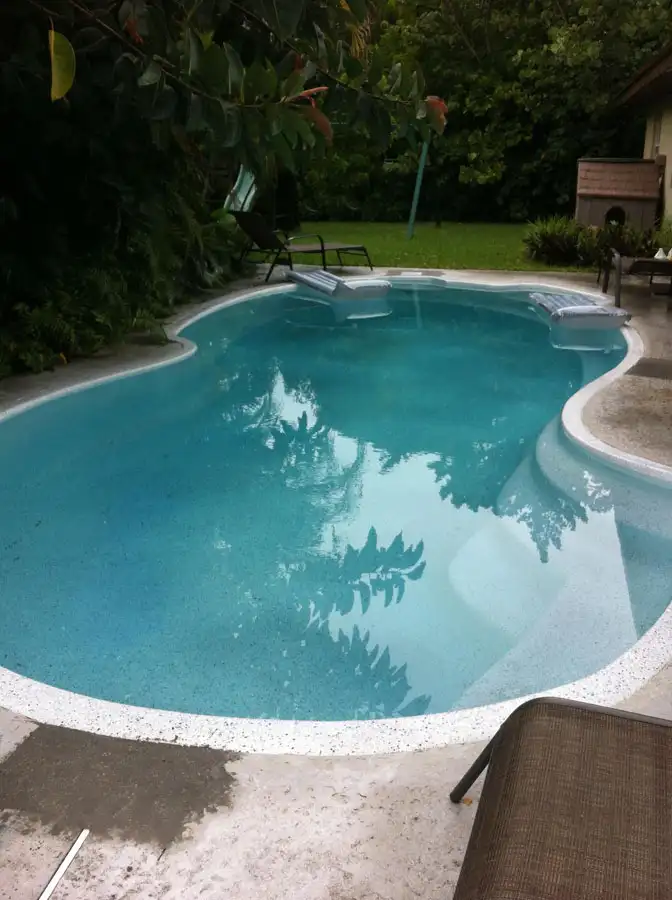
What we repair
From minor surface issues to structural work, all of it fiberglass-specific.
Cracks & crazing
From cosmetic spider cracks to structural cracks that flex or leak — each needs a different fix, and we know which is which.
Osmotic blisters
We open, dry, and rebuild blistered areas, then seal them against future water intrusion.
Bulging or distorted walls
Often groundwater or backfill pressure. We correct the shell and address what pushed it in.
Worn steps & benches
High-traffic areas wear first. We rebuild and resurface steps so they’re safe and match the pool.
Leaking fittings & penetrations
Returns, skimmers, and lights are common leak points on fiberglass shells — we reseal them correctly.
Gouges & impact damage
Accidents happen. Localized laminate damage can usually be rebuilt without refinishing the whole pool.
Frequently asked questions
Do I need a full refinish, or just a repair?
Can a leaking fiberglass pool be saved?
Will a repaired spot be visible?
Is an empty fiberglass pool dangerous?
Something wrong with your pool?
Describe the symptom — cracks, bubbles, water loss — and we’ll tell you what it likely means, free.