
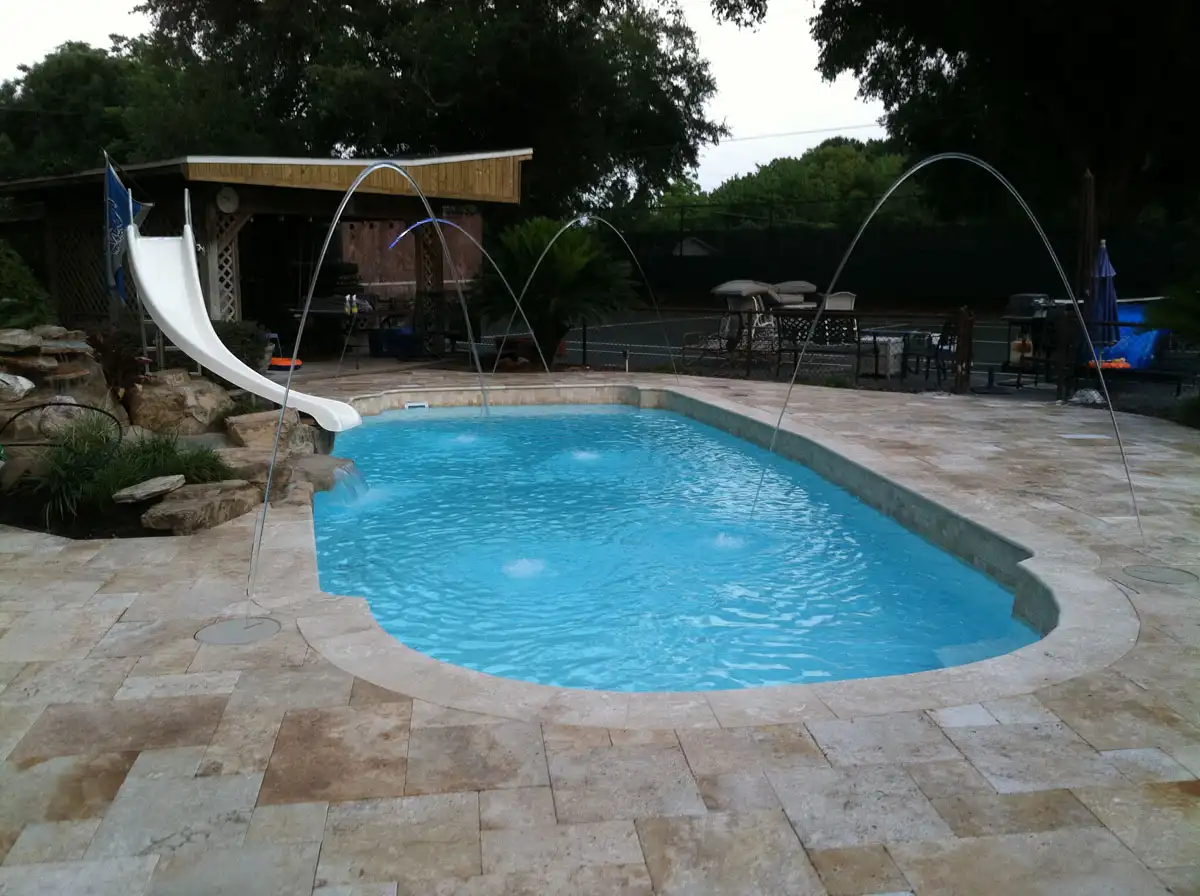
A specialist’s eyes on your shell
General home inspectors do their best, but fiberglass pools are a niche within a niche. The difference between harmless gelcoat crazing and a structural crack — or between a cosmetic stain and early blistering — isn’t obvious unless you work on these shells every week.
Our inspections evaluate the finish condition, structural integrity, steps and benches, fittings and penetrations, and visible plumbing behavior, then put it all in plain language: what’s fine, what to watch, and what needs attention now, with realistic numbers attached.
What we look at
A fiberglass-specific checklist, not a generic pool once-over.
Finish & gelcoat health
Oxidation, fading, porosity, staining, and remaining service life of the surface.
Cracks & crazing
Whether cracking is cosmetic or structural, and what’s driving it.
Blistering & delamination
Early osmotic damage that’s invisible to most buyers until it spreads.
Shell geometry
Bulging, settling, or distortion that points to ground or water pressure issues.
Fittings & penetrations
Skimmers, returns, and lights — the most common sources of slow leaks.
Written findings
A clear report you can act on, negotiate with, or file away for peace of mind.
Frequently asked questions
When should I get a pool inspected?
Can you inspect a pool that’s full?
What do I get afterward?
Do you inspect pools you didn’t work on?
Book a pool inspection
Buying, selling, or just unsure what you’re looking at? Let’s find out for certain.